Free Resource
What a service page needs so ChatGPT recommends you. If your service page says quality, trusted, reliable, then contact us for a quote, an AI answer has nothing in it to quote. Here's what to put on it instead: eleven sections, in order, with what goes in each and why.
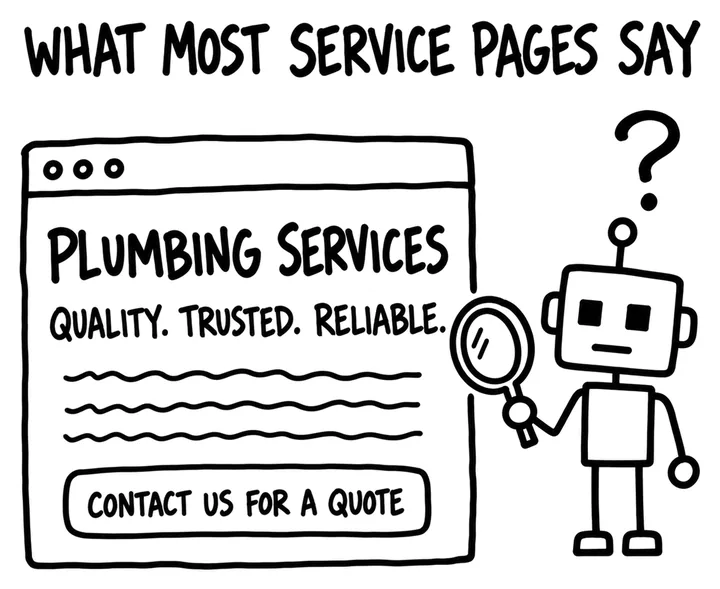
Some AI answers name a few businesses before anyone visits a website. A service page has the best chance of being named when it answers what buyers actually ask: what you do, where, for how much, and whether you can be trusted with it.
The reel covered five of the eleven sections. Here they are with the drawings, in the order they sit on the page.
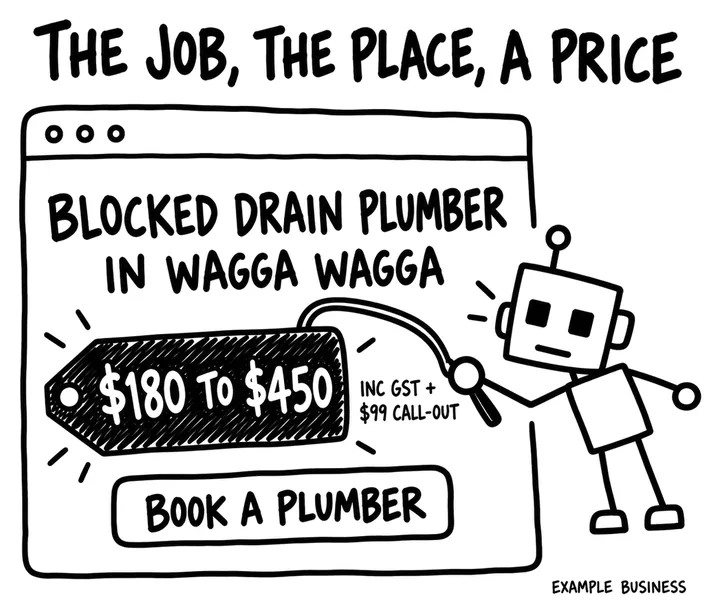
The top of the page names the service and the place in plain words, then gives a starting price, a range, or a plain line on how pricing works. Not contact us for a quote. Budget questions are among the most common questions buyers ask, and a page with a real range can answer them.
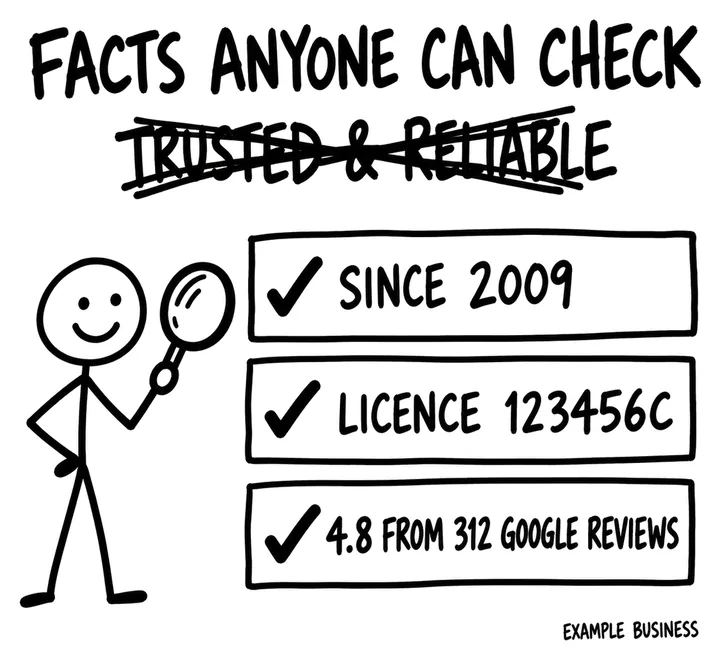
Years in business, your licence or accreditation number, and your review rating with the count and where it comes from. Checkable facts carry more weight than trusted and reliable, which every competitor says too.
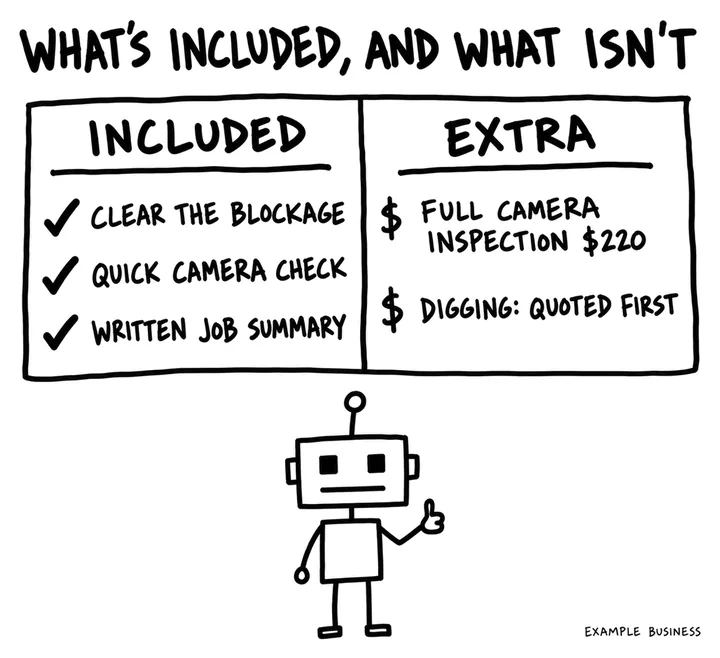
One plain list of what the job covers and a second list of what costs extra. Scope is how AI matches you to the exact question someone asked, and the exclusions stop wrong-fit enquiries before they reach your phone.
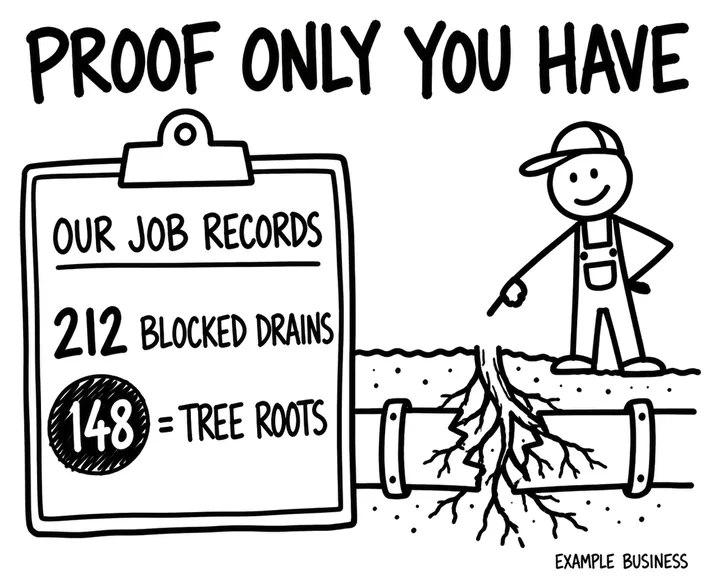
One real job story only you could tell: what you found, how long it took, before and after, and a number from your own records. Evidence nobody else has is what makes your page worth quoting over ten others saying the same thing.
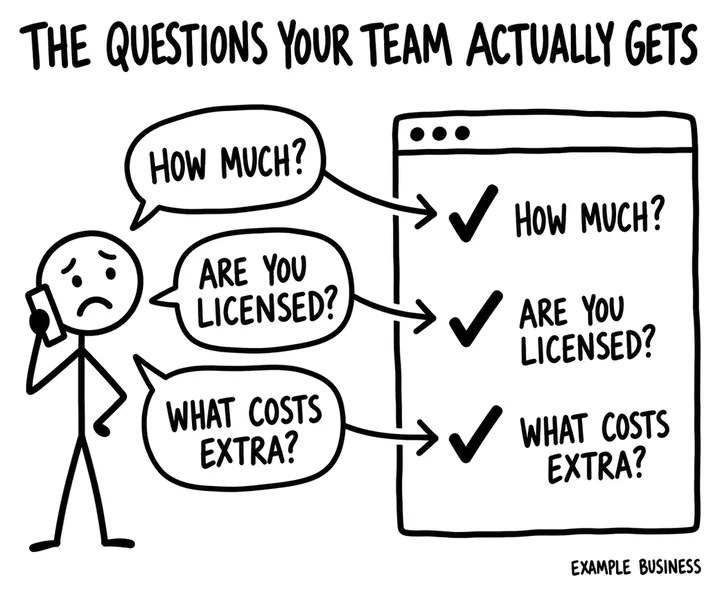
The questions people ask on the phone, answered right there on the page in two to four sentences each. Real questions in real words match how people ask AI. Invented keyword questions don't.
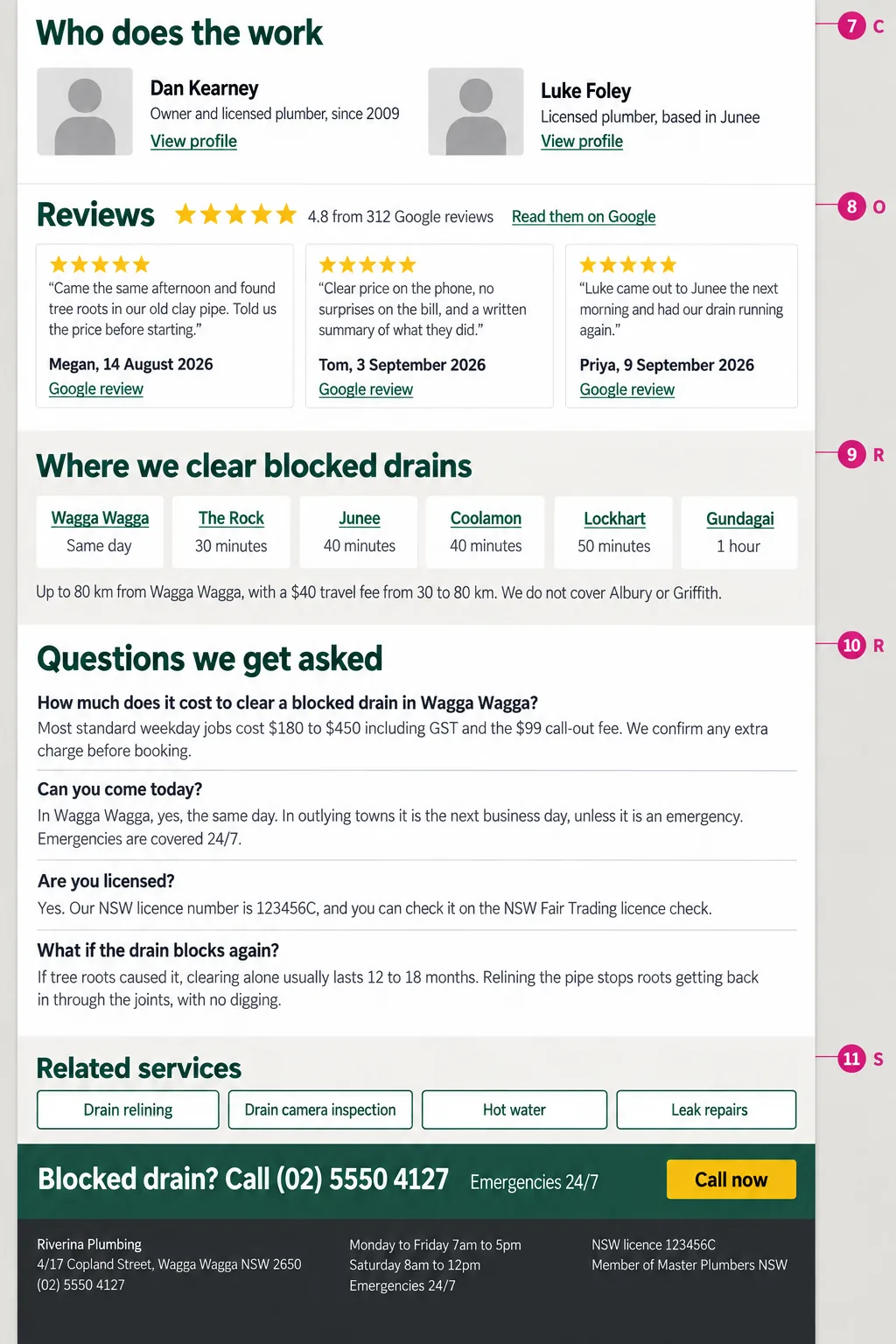
Eleven sections, in the order they sit on the page. The page below is a finished example for an invented plumber, numbered to match the list.
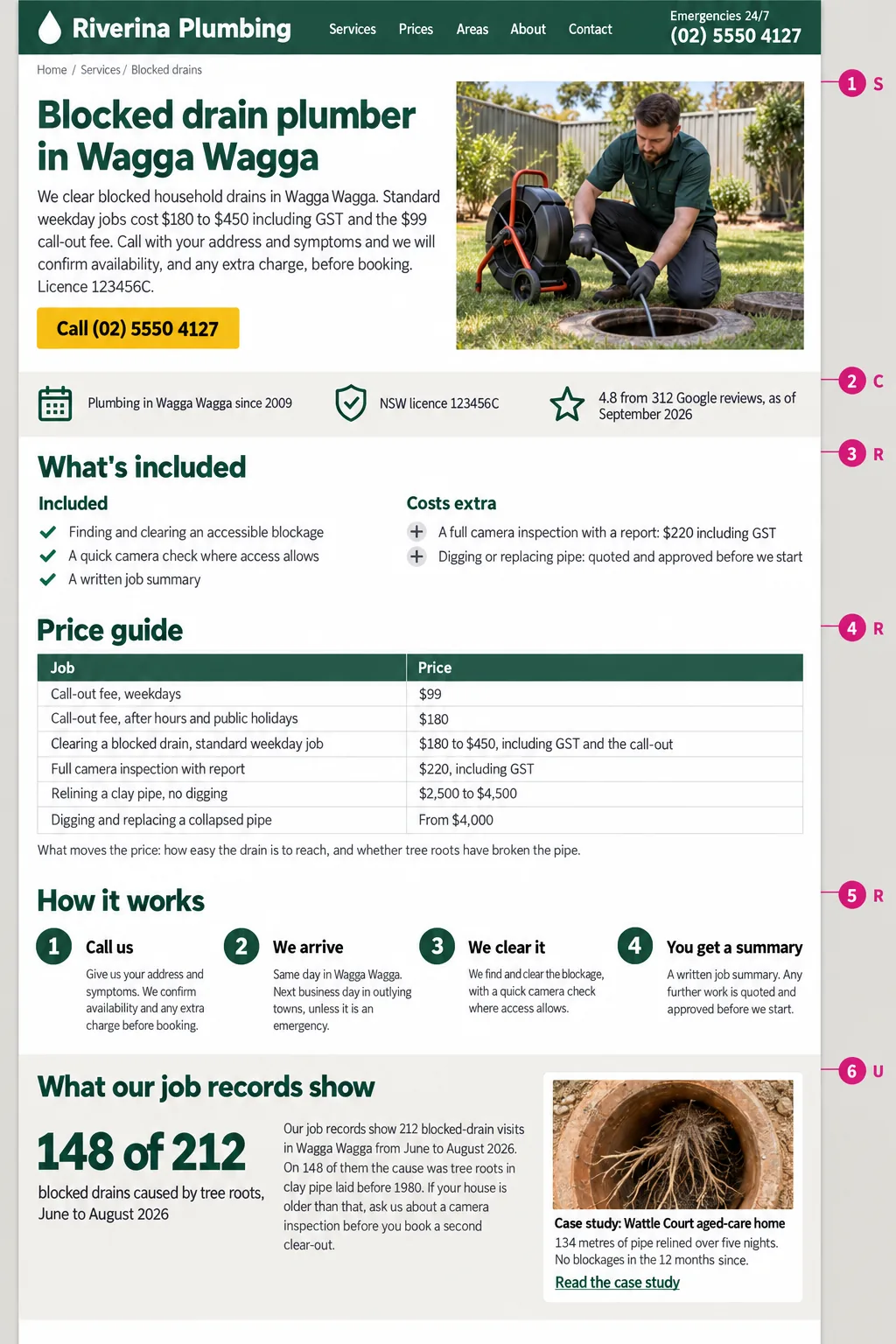
An H1 that names the service and the place. Under it, two or three sentences a buyer could quote: what you do, for whom, where, the starting price or how pricing works, and how fast you respond. One main button.
The opening lines are what a skimming buyer judges you on, and a likely passage for an AI to quote.
Three facts anyone can check: years operating, licence or accreditation number, and your review rating with the count and where it comes from.
Specific, checkable facts carry more weight than adjectives like trusted or leading.
A plain list of what the service covers, and a second list of what it doesn't.
Scope is how a model matches your offer to a specific question. Exclusions stop the wrong-fit enquiries.
Starting prices or ranges by job type, the things that move the price, and any call-out or minimum fee.
A page that gives a real range answers the budget question. One that only says contact us for a quote leaves it unanswered.
The steps from first contact to finished job, with typical timing for each.
It answers the what happens next question that can stop people booking.
One or two short job stories with details only you could publish: what you found, how long it took, before and after, a number from your own records. Link the full case study.
Evidence nobody else has is what makes a page worth citing instead of one of the ten others saying the same thing.
The qualified people who do this work, each linked to their profile page.
Named, credentialed people are a trust signal for buyers and for systems that weigh expertise.
Recent reviews as plain text on the page, with the reviewer's first name, the date and a link to the source, such as your Google Business Profile.
What other people say about you counts. Plain text can be read; a widget that loads later may not be.
The areas you cover for this service, each linked to its location page, and a plain line saying where you don't go.
Where questions are a big part of local search. The links tie the service to the places it's genuinely available.
The questions your sales and support team actually get about this service, each answered in two to four sentences, visible on the page.
Real questions in real words match how people ask AI. Invented keyword questions don't.
Links to closely related services, and one clear next step with the phone number written as text.
It keeps buyers moving and shows crawlers how your services connect.
Riverina Plumbing in Wagga Wagga is an invented business, written to show the level of detail each section needs. Copy the specificity, not the words.
LocalBusiness, or a more specific type such as Plumber, belongs on your location pages, with facts that match your Google Business Profile. On the service page itself, missing schema is a small gap. Schema that disagrees with the page is worse than none.
Once a month, ask these in ChatGPT, Perplexity and Google AI Mode with your service and place filled in, and note whether you're named and linked.
The free AI Visibility Check skill gives you real customer questions to run in ChatGPT and other AI tools, then scores the answers you paste back. In GA4, track sessions from AI assistants and the key events that land on this page. And count the enquiries it brings in, noting which question the buyer asked first.
Put the job, the place and a price in the first screen of your service page, as text rather than inside an image. It's one of the first things a buyer looks for, and a likely passage for an AI to quote.
