Google added platform properties to Search Console, meaning your YouTube channel, TikTok, Instagram and X profiles get the same query-level data a website gets: the exact searches where your content appears. This free tool reads those exports and maps the content pillars you own, which platform carries each one, and the part a pillar chart never gives you: an Optimize / Embed / Produce action plan, exported as a spreadsheet plus a prompt pack that briefs your next YouTube video, Reel and X post.
Private by design: everything runs in your browser. Nothing is uploaded, nothing is stored, and when you close the tab it is gone.
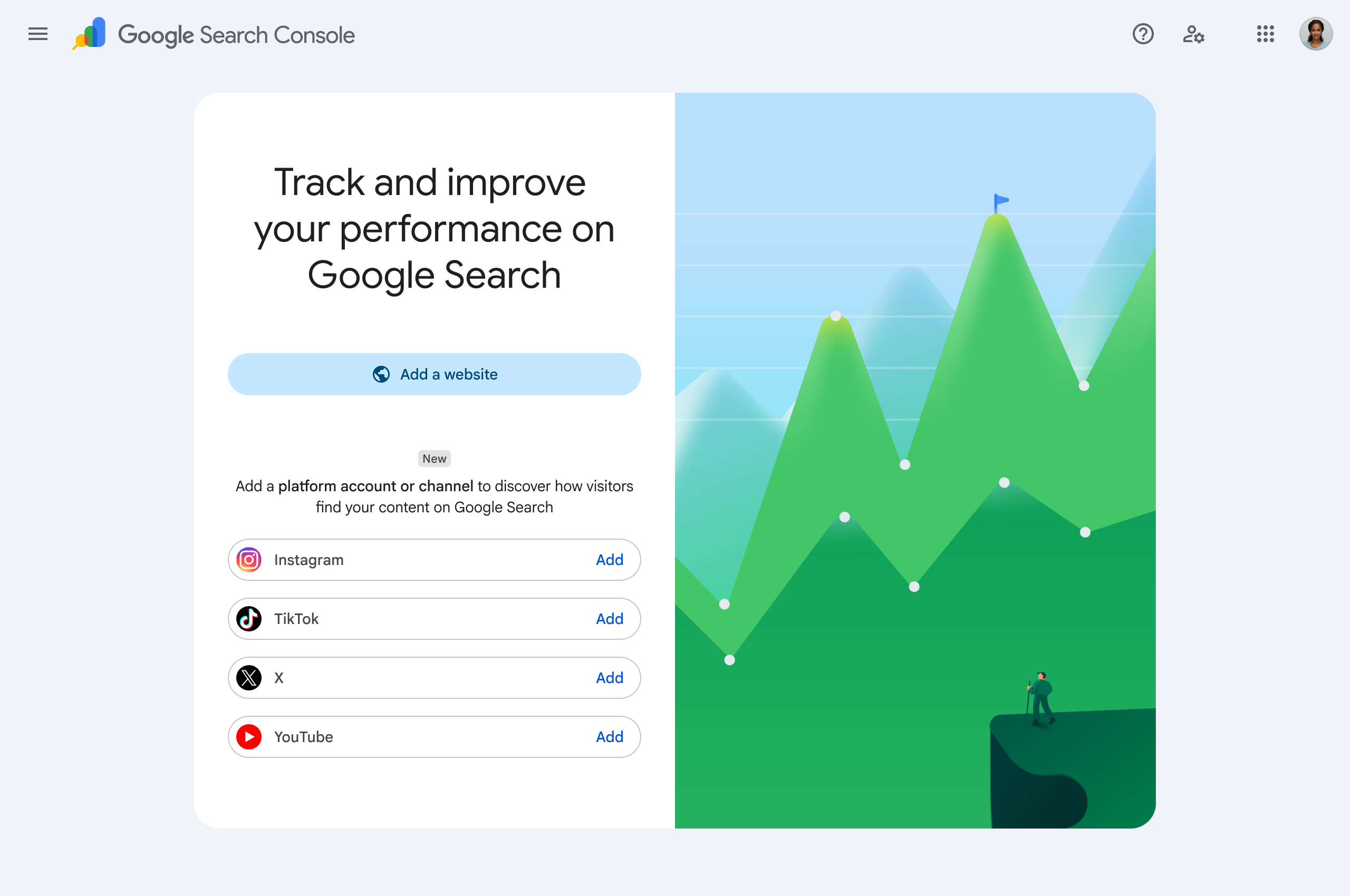 Google's platform-property setup screen (source: Google Search Central).
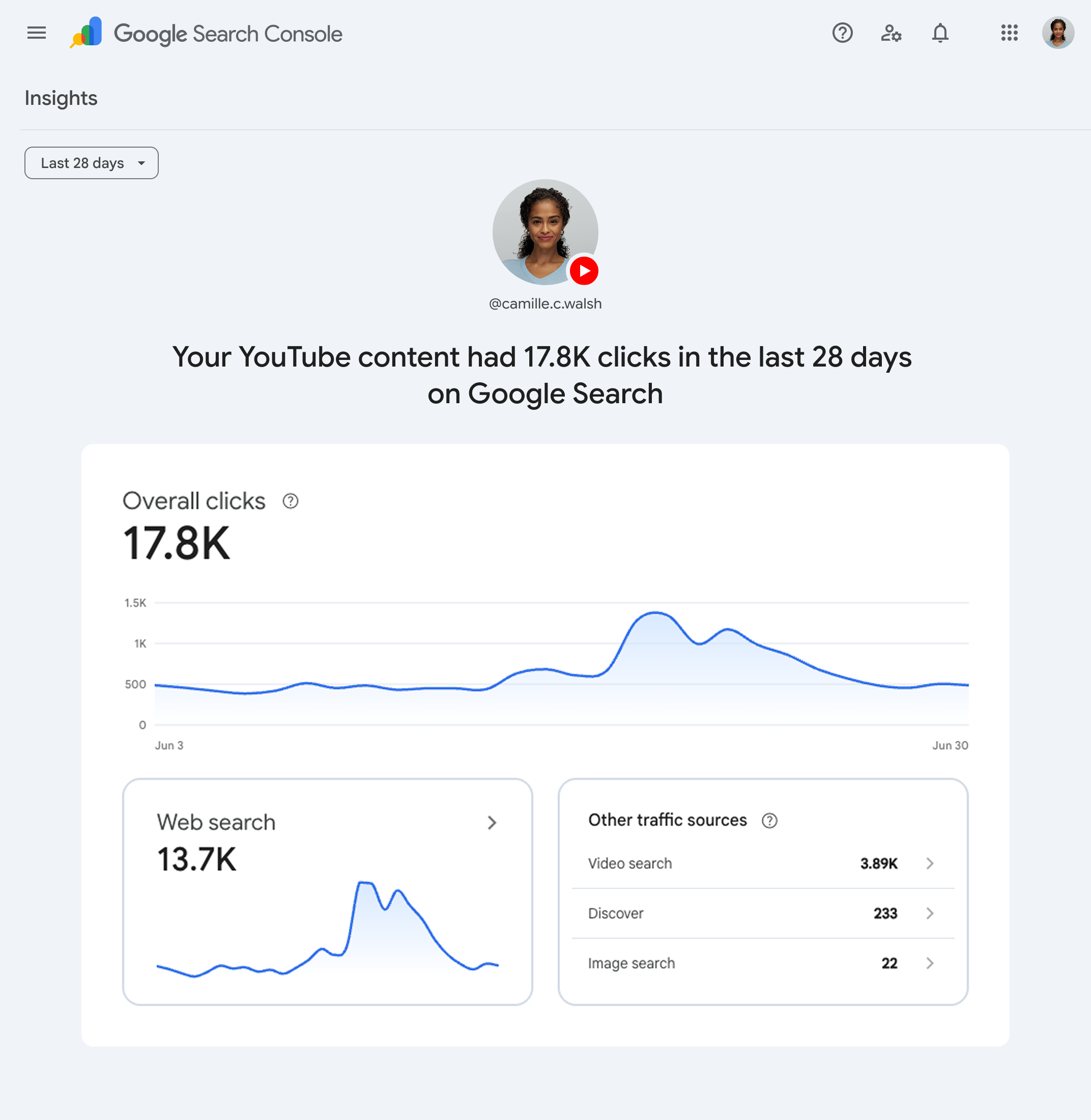 What the property view looks like once data flows (source: Google Search Central).
Drag your Search Console exports in here or click to browse
One ZIP per platform property (YouTube, TikTok, Instagram, X, or your site). Loose CSV exports work too. Performance report > Export > Download CSV.
Your Social Topical Map
The topics Google associates with your content, ranked by impressions. "Avg position" is weighted by impressions, so it reflects where most people actually saw you. Tiers: Owned (1-3), Page one (4-9), Striking distance (10-50), Early signal (beyond 50).
Queries where you already rank close (positions 4 to 20) with real impressions. Fix the packaging before making anything new: a question-format title in the query's own words, a thumbnail that completes it, a first description line that answers it, chapters, and a pinned comment. Reconfiguring keeps all your historical data; re-uploading starts from zero. Got one video to fix? The YouTube Video Search Result Optimizer turns that single export into the full spec.
Pillars one platform carries almost alone. Embed the winning piece into your matching website page and publish a native derivative on the platforms where the pillar has no presence. One topic, multiple placements in the same results page.
Pillars with substantial search demand where your average position says nothing of yours truly ranks. Make ONE definitive long-form piece per pillar, then cut short-form derivatives from it. Never make several shallow pieces for the same pillar.
Ready-to-paste briefs built from your own search data. Take each pack to Claude or ChatGPT in order: the YouTube brief first, then the Reel brief (it cuts short-form from the long-form answer), then the X posts. One definitive video per pillar; short-form is a derivative, never the other way round.
The tool reads the Queries file in each Search Console export, strips filler words, and finds the phrases carrying the most search impressions across everything you uploaded. Queries sharing a phrase become a pillar; pillars are ranked by impressions, and each one's average position is impression-weighted so a stray page-90 phrasing cannot drag down a topic you actually own. Brand searches are split into their own pillar so they never inflate a topic. Platform attribution comes from each export you upload, so the same pillar can show, say, 80% YouTube and 20% TikTok.
The action plan applies the Social Topical Map framework, coined in July 2026 by Lawrence Hitches, an AI SEO consultant who runs his AI search experiments in public: one central-entity topical map projected across every platform, measured through Search Console platform properties, and acted on in three moves, cheapest first:
Read the full framework at lawrencehitches.com/social-topical-map. For the website side of topic ownership, pair this with our Topical Authority Analyzer and the AI visibility measurement guide.
Data honesty: Search Console's query export is capped at the top 1,000 rows per platform property and anonymises rare queries, so your long tail is under-counted. The tool reports what is measured and labels what is inferred. Pillar grouping is deterministic keyword grouping, not magic; two people can reasonably merge or split a pillar differently.
One central topic, projected onto every platform, measured in one place, acted on in three moves. Framework by Lawrence Hitches (July 2026).
One central-entity topical map projected across your social platforms, measured through Google Search Console platform properties. The framework was coined by Lawrence Hitches in July 2026. Instead of running a separate strategy per platform, you map which topics you own in Google search across all of them, then act: optimise what is close, embed what wins, produce what is missing.
In Search Console, open the property for your channel or profile, go to the Performance report, set your date range, then Export and Download as CSV. The download is a ZIP. Upload it here as-is, one per platform. If you have not verified your profiles as properties yet, do that first; give it a few weeks of data before the map means anything.
No. The whole tool is JavaScript running in your browser. Your files never reach a server, nothing is stored, and the spreadsheet and prompt-pack downloads are generated on your device. Once the tab closes, none of it exists anywhere.
The three moves of the framework, cheapest first. Optimize: you already rank within striking distance, so fix titles, descriptions and chapters instead of re-making content. Embed: you own the topic on one platform, so cross-place the winning piece where the topic is invisible. Produce: real demand, no definitive piece, so make one.
Deterministic keyword grouping: filler words are stripped, the phrases carrying the most impressions become pillar seeds, and queries sharing a seed join that pillar. Brand searches get their own pillar. No AI service sees your data.
